
For All Access MembersSign in to check your access.Sign in →
HandwovenWeaving projects, techniques, and inspiration.Visit Handwoven →
Shifting Structures Towels
Warp just once—and then weave towels that are all different.
Handwoven · Project PDF + WIF
| Type | Pattern |
|---|---|
| From | Handwoven |
| Author | Alan Luhring |
| Format | PDF, WIF |
Sound, color, and the perfect draft combine in this exuberant piece.
This pattern is part of Handwoven All Access. Sign in to check your access.
Or buy it outright: Buy the issue ↗ (Fall 2026)
A professional passion—the study of musical patterns—led to a design that transforms sound into color and shapes.
Change ringing is a method of ringing tuned bells to create music by following mathematically driven combinations and orders rather than by playing traditional melodies. It originated in seventeenth-century England for use with church bells, later spreading to other locations and types of bells; some handbell ringers in the United States use change-ringing methods.
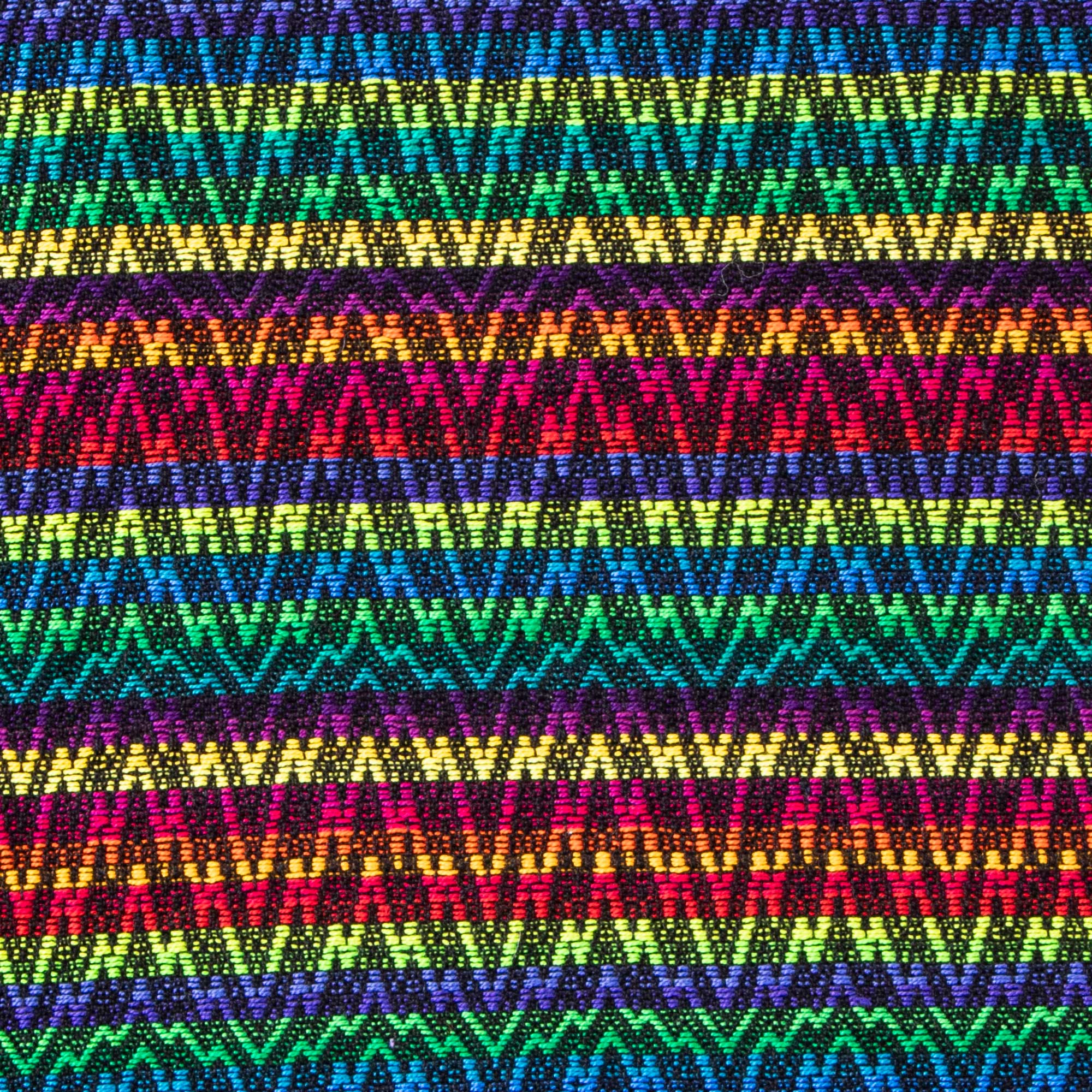
For this project, Alan Luhring set out to apply the principles of change ringing to weaving by substituting colors for bells. He worked with the Grandsire Doubles change-ringing method and two hues each of the 10 colors in Albert Munsell’s color system (green, green yellow, yellow, yellow red, red, red purple, purple, purple blue, blue, and blue green). Download the project to learn more about change ringing and Grandsire Doubles.
Because bells ringing in the open air create a shimmering sound, he wanted a weaving draft that could work with colors to portray the same type of shimmer in fabric. He chose an elaborate point twill flame pattern. Black in the warp and tabby weft provides good contrast with every color, while subtly dampening what might otherwise be an overly bright fabric.
Structure
Twill with tabby.Equipment
8-shaft loom, 19" weaving width; 10-dent reed; 2 shuttles; 21 bobbins.Yarns
Warp: Tubular Spectrum 20/2 mercerized cotton (8,400 yd/lb; Lunatic Fringe Yarns), Black, 1,265 yd.
Weft: Tabby weft: Tubular Spectrum 20/2 mercerized cotton, Black, 430 yd.
Pattern weft: Tubular Spectrum 10/2 mercerized cotton (4,200 yd/lb; Lunatic Fringe Yarns), 10 Yellow, 5 Yellow, 10 Yellow Red, 5 Yellow Red, 10 Red, 5 Red, 10 Red Purple, 5 Red Purple, 10 Purple, 5 Purple, 5 Blue, 10 Blue Green, 5 Blue Green, 10 Green, 5 Green, 10 Green Yellow, and 5 Green Yellow, 21 yd each; 10 Blue, 5 Purple Blue, and 10 Purple Blue, 23 yd each.Dimensions
Width in the reed: 188⁄10".
Woven length: (measured under tension on the loom) 38".
Finished size: (after wet-finishing) 16½" × 34" plus 1½" fringe.
Photos by Matt Graves
---Visit our help article for more information on WIFs, including what they are and how to use them.
Warp just once—and then weave towels that are all different.
Pattern · Handwoven · Project PDF + WIFs

Weave a tote bag that’s covered in circles.
Pattern · Handwoven · Project PDF + WIF

A long weft gradient plus contrasting stripes and borders make for a stunning shawl.
Pattern · Handwoven · Project PDF + WIF + LP

Break away from the grid with network-threaded circles.
Pattern · Handwoven · Project PDF + WIF

Warp stripes do most of the work in these towels, and the weaving is easy.
Pattern · Handwoven · Project PDF + WIFs

Towels that bring delight twice—first as you watch the patterns grow, and then as they brighten your kitchen.
Pattern · Handwoven · Project PDF + WIFs + Lift Plan

These cheerful towels are the perfect place to try out ideas.
Pattern · Handwoven · Project PDF + WIFs

Brighten your tabletop with this brilliant piece.
Pattern · Handwoven · Project PDF + WIF